
The No Hassle Naija To Canada Japa System
-
Module 1: Welcome To The Canada Japa System Members Area6 Topics
-
RECENT Updates To The Canada International Student Program6 Topics
-
November 15th 2024 - New Updates For International Students
-
November 1st 2024 PGWP Eligibility Updates
-
Massive Changes In Sept 2024 - Study Permit Caps, SOWP and PGWP Changes
-
CHANGES IN JANUARY 2024
-
Additional information about International Student Program reforms - February 2024
-
CHANGES IN DECEMBER 2023
-
November 15th 2024 - New Updates For International Students
-
Module 2: Step 1: Getting A Letter Of Admission5 Topics
-
Module 3A: Resources Needed To Get Admission in a College/University - Part 126 Topics
-
2024 Changes of College Study Programs That Can Get PGWP
-
School SEARCH TOOL - College and University Search Tool
-
Search Tool For Colleges In Ontario
-
Search Tool For Universities In Canada - Compare Different Universities In Canada
-
Designated Learning Institutes (DLI) List
-
Ask Jenny the Best Level of Study In Canada For You
-
Scholarship Opportunities To Study In Canada
-
Video - How To Search For Scholarship & Funding In Canada
-
Funding Your Studies - Scholarships, Loans and Bursaries
-
How To Apply for Scholarships To Study In Canada
-
How To Find And Apply For Scholarships In Canada
-
Video - How To Choose The Best Program To Study - The 'Best Fit" For You
-
Universities That Accept Second Class Lower For Masters Degree
-
IMPORTANT Documents Required To Apply For Graduate Admission
-
Letters of Recommendation For Admissions
-
Academic CV Format And SAMPLES For Graduate Studies
-
Step By Step How To Create An Academic CV
-
Finding Supervisors for Your Masters and PhD
-
Professor Email Samples And Interview Tips
-
How to Avoid IELTS in your Application
-
The Importance of a Statement of Purpose
-
How To Write A Winning SOP
-
SAMPLE Statement of Purpose You Can Model
-
SAMPLE 2 STATEMENT OF PURPOSE YOU CAN MODEL
-
Sample Statement of Purpose Examples
-
How To Handle Canadian College Applications
-
2024 Changes of College Study Programs That Can Get PGWP
-
Module 3B: Resources Needed To Get Admission In a College/University - Part 213 Topics
-
VIDEO: The PLAIN UNTOLD truth about finding funding for graduate schools in Canada
-
Video: 8 Cheapest Universities For International Graduate Students
-
How to Calculate Your CGPA
-
Easy To Use Tool: Calculate Your CGPA in Minutes
-
Tools To Convert Your CGPA To Canada 4.0 Grade Point CGPA
-
Comparison of The Nigerian 5 GPA Scale to Percentage
-
Video - How To Get A Loan For Your Study PLUS The Top Loan Organizations You Can Explore
-
How To Get Affordable International Loan To Study In Canada
-
VIDEO: Loan Application Walkthrough with MPOWER Financing
-
LIST of Mpower Approved Schools
-
VIDEO - How To Make Payments To Canada Schools With Flywire
-
Resources for GMAT and GRE
-
HOW TO CHANGE YOUR DLI IN CANADA
-
VIDEO: The PLAIN UNTOLD truth about finding funding for graduate schools in Canada
-
Module 3C: PDF Databases of Schools/Programs You Can Explore11 Topics
-
Graduate Programs For Medical Graduates (Apart From Nurses)
-
NURSING In CANADA: Requirements for Study & Practicing Nursing In Canada
-
Top 10 Most Valuable Degree Programs in Canada
-
View Programs Offered In New Bunswick Community College
-
View Programs Offered In Selkirk College, British Columbia
-
Undergraduate Programs Offered In the University of Manitoba
-
Graduate Programs Offered In the University of Manitoba
-
PACE Programs University of Winnipeg
-
Saskatchewan Polytechnic Program List For Internationals
-
International Student Programs At Cape Breton University
-
Programs At Assiniboine Community College Manitoba
-
Graduate Programs For Medical Graduates (Apart From Nurses)
-
Module 4: THE BASICS OF APPLYING FOR AN UNDERGRADUATE PROGRAM2 Topics
-
Module 5: The Study Visa Application Process24 Topics
-
The First Thing To Do If You Have Been Refused Canada Visa Previously
-
Visa Documents You MUST Have & What To Include In Your Visa SOP
-
VIDEO: THESE DOCUMENTS WILL GIVE YOUR VISA A HIGH SUCCESS CHANCE
-
How Much Financial Commitment Do You Need?
-
How Much Do You Need To Study In Canada: Updated January 2024
-
VIDEO: How To Avoid Visa Refusal For Finance And Assets Reasons!
-
VIDEO - EVERYTHING YOU NEED TO KNOW ABOUT AVOIDING VISA REFUSAL FOR PROOF OF FUNDS REASON
-
GIFT DEED SAMPLES
-
VIDEO: How To Write The PERFECT SOP!
-
Sample Statement of Purpose For Visa Application......1
-
Sample Statement of Purpose For Visa Application....2
-
Important Tips To Construct Your Study Plan Or Visa Statement of Purpose (SOP)
-
Why Your Study Visa Could Be Denied
-
Sample GCMS Refusal Notes You Can Learn From
-
VIDEO - How To Apply On The IRCC Online Portal For Study Visa (Using the GCKey) - The Older Method
-
VIDEO: How To Use The New IRCC Online Portal To Submit Your Canada Study Visa Application - The Newer Method
-
DETAILED LIST OF DOCUMENTS FOR STUDY VISA AND THEIR APPROPRIATE CATEGORIES FOR UPLOAD IN THE APPLICATION PORTAL
-
Understanding The Canada Study Permit Application Process
-
How to Handle Letters of Sponsorship
-
How To Send your bank statement to the Embassy
-
What Happens After You Submit Your Canada Study Visa Application
-
How To Change Your School And Program (DLI) In Canada
-
CASE STUDIES: DIFFERENT CANADA STUDY VISA STORIES AND TIMELINES YOU CAN LEARN FROM!!
-
VIDEO - HOW TO EXTEND YOUR CANADA STUDY PERMIT IN CANADA
-
The First Thing To Do If You Have Been Refused Canada Visa Previously
-
Module 6: FAMILY APPLICATION RESOURCES11 Topics
-
Can I Go To Canada With My Family Immediately?
-
How to come to study in Canada accompanied by your family.
-
VIDEO WEBINAR: Steb By Step Strategies To Apply For Study Visa With Your Family
-
Bringing Your Spouse and Children To Canada While You Study
-
New Update On Spousal Open Work Permit - March 19, 2024
-
Sample Family Visa Application Letter
-
GCKey Portal Walkthrough How To Apply For Your Family Members
-
VIDEO: What Visas Should Your Spouse And Children Apply For?
-
How Your Spouse Can Convert Visit Visa To Work Permit
-
Visitor Visa For Parents Of International Students - How To Apply
-
Medical Inadmissibility Canada – Can I be refused visa for medical reasons?
-
Can I Go To Canada With My Family Immediately?
-
Module 7: POST GRADUATE WORK PERMIT5 Topics
-
Module 8: Your Bonuses3 Topics
-
HOW TO CONTACT ME2 Topics
-
Module 9: Paid Professional Services Provided & Book An Appointment
-
Module 10: Frequently Asked Questions6 Topics
-
BONUS: How To Get Permanent Residence After Your Studies2 Topics
-
Testimonials From People Just LIKE YOU!
-
Continued Support After You Receive Your Study Visa
-
Additional Information
-
WATCH OUR PREVIOUS WEBINARS HERE
CHANGES IN DECEMBER 2023
Revised requirements to better protect international students
December 7, 2023—Ottawa
The Honourable Marc Miller, Minister of Immigration, Refugees and Citizenship, announced today that starting January 1, 2024, the cost-of-living financial requirement for study permit applicants will be raised so that international students are financially prepared for life in Canada. Moving forward, this threshold will be adjusted each year when Statistics Canada updates the low-income cut-off (LICO). LICO represents the minimum income necessary to ensure that an individual does not have to spend a greater than average portion of income on necessities.
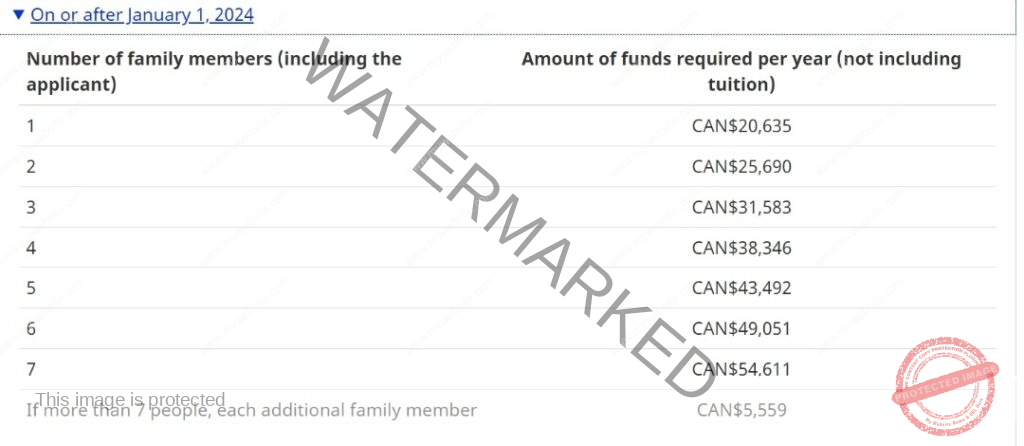
The cost-of-living requirement for study permit applicants has not changed since the early 2000s, when it was set at $10,000 for a single applicant. As such, the financial requirement hasn’t kept up with the cost of living over time, resulting in students arriving in Canada only to learn that their funds aren’t adequate. For 2024, a single applicant will need to show they have $20,635, representing 75% of LICO, in addition to their first year of tuition and travel costs. This change will apply to new study permit applications received on or after January 1, 2024.
While this will help prevent student vulnerability and exploitation, we recognize that the impact of the change could vary depending on the applicant. Next year, in collaboration with partners, we intend to implement targeted pilots that will test new ideas aimed at helping underrepresented cohorts of international students pursue their studies in Canada.
Today’s announcement follows important reforms to the International Student Program announced on October 27, 2023, regarding the development of a new framework to recognize learning institutions that provide top-quality services and support, including housing, to international students. We expect learning institutions to only accept the number of students that they can provide adequate supports for, including housing options.
In welcoming international students, we have a responsibility to make sure that students are supported when they come to our country. Ahead of the September 2024 semester, we are prepared to take necessary measures, including limiting visas, to ensure that designated learning institutions provide adequate and sufficient student supports as part of the academic experience. In order to achieve this result, it is imperative to work together with provincial and territorial governments, learning institutions and other education stakeholders, so we can ensure international students are set up for success in Canada.
Minister Miller also provided an update on 3 temporary policies affecting international students that were all set to expire at the end of 2023, including the following:
- The waiver on the 20-hour-per-week limit on the number of hours international students are allowed to work off campus while class is in session will be extended to April 30, 2024. International students already in Canada, as well as applicants who have already submitted an application for a study permit as of December 7, 2023, will be able to work off campus more than 20 hours per week until that time. We continue to examine options for this policy in the future, such as expanding off-campus work hours for international students to 30 hours per week while class is in session.
- The facilitative measure that has allowed international students to count time spent studying online towards the length of a future post-graduation work permit, as long as it constitutes less than 50% of the program of study, will continue to be in place for students who begin a study program before September 1, 2024. This measure will no longer apply to students who begin a study program on or after that date. Distance learning facilitation measures were first implemented in 2020 in response to travel restrictions during the pandemic, and were reduced in scope in September 2022. At this point, the vast majority of international students are studying in person in Canada.
- In response to labour market disruptions during the pandemic and post-pandemic recovery, a temporary policy was introduced on 3 occasions to provide an additional 18-month work permit to post-graduation work permit holders as their initial work permit was expiring. Foreign nationals with a post-graduation work permit expiring up to December 31, 2023, remain eligible to apply. However, this temporary policy will not be extended further.
We value the significant social, cultural and economic benefits that international students bring to Canada, and for those benefits to continue, we must tackle issues that have made some students vulnerable and have challenged the integrity of the International Student Program. With the long-overdue increase to the cost-of-living threshold, students arriving in Canada will be on a stronger financial footing as they begin their studies
New Proof Of Funds